The Humming Under the Bandage
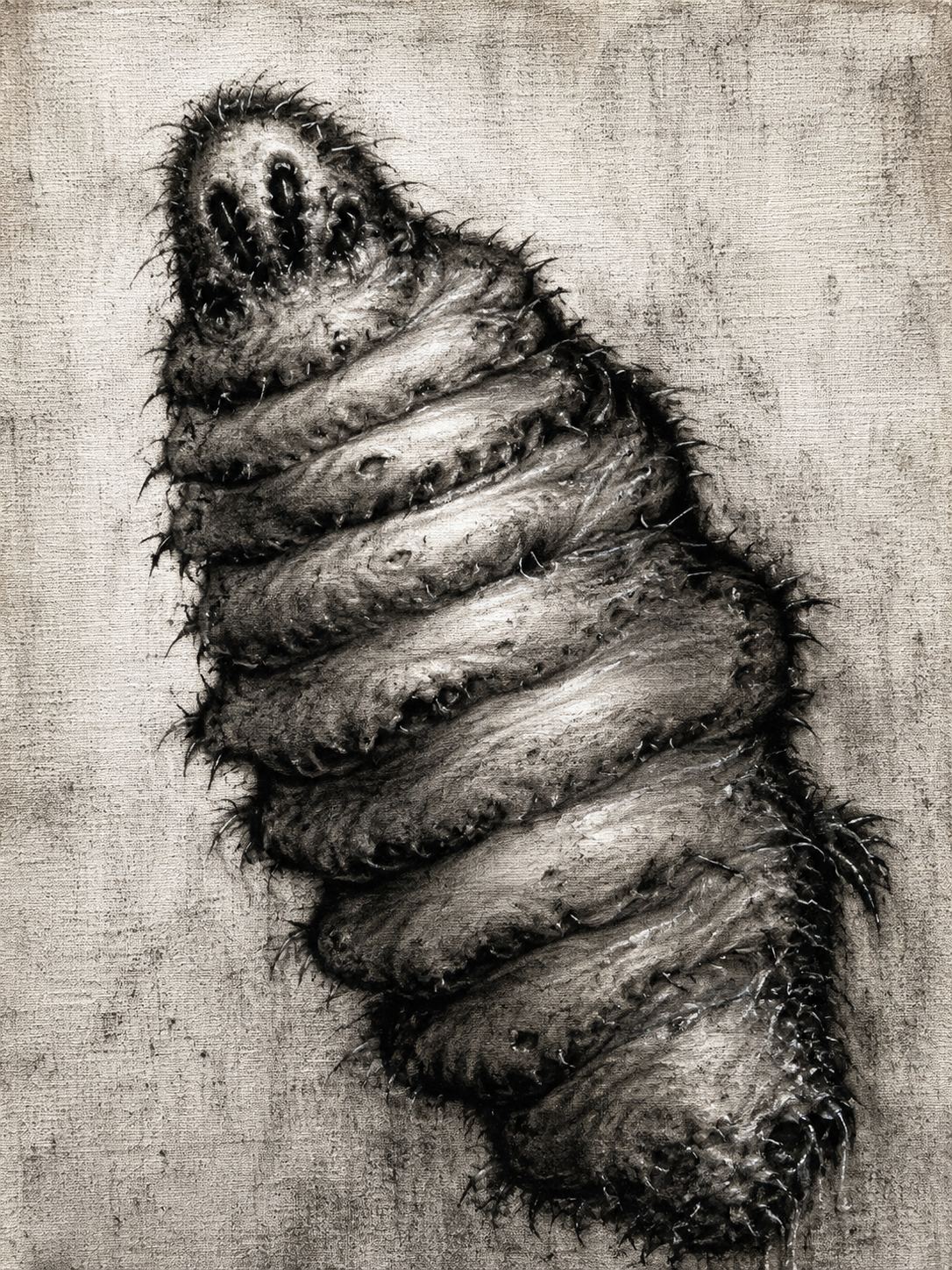
THIS IS A WORK OF FICTION
At Gariahat crossing, Calcutta welcomed Arun Sen the way old relatives welcome you after years abroad: with sweat, accusation, frying oil, and no usable space to stand.
The afternoon had thickened into that particular pre-monsoon stew in which humans lose their crisp edges and become lightly boiled citizens. Buses leaned and coughed. Yellow taxis moved with the philosophical resignation of old cows. From a tea stall under a broken blue tarpaulin came the wet smack of clay cups being stacked, the hiss of milk, the quarrel of three men over whether the country had gone to hell last Tuesday or much earlier. Above them, tram wires drew tired black lines across the white sky.
“Baba, why is that dog pink?” Mira asked.
She was twelve, Texan by pronunciation and Bengali by parental ambush. She wore sneakers far too clean for the pavement and stared at a street dog whose left flank had lost its fur in a raw oval. Someone had daubed the wound with a purple medicine that made it look festive, as if the dog had been invited to a puja and partly painted by children.
“Medicine,” Arun said.
“Looks like candy.”
“Everything here looks like something else first.”
His wife Nandita gave him a look over the top of her sunglasses. “Don’t start.”
“I haven’t started. This is still my warm-up act.”
They had landed that morning from Dallas after twenty-three hours of airports, reheated food, and the emotional dentistry of travel with family. In Arun’s left calf, under a neat adhesive bandage, a cut from his brother-in-law’s ranch gate pulsed faintly. He had meant to change the dressing in Doha. Then again at baggage claim. Then in the taxi. A life of good intentions, he had discovered, was mostly a museum of things not done.
His mother’s flat was in a narrow lane off Hindustan Road, an old building with a green gate, a lift that worked when it felt culturally respected, and balconies that seemed to have been designed by a committee of pigeons. The driver refused to enter the lane because a vegetable cart, two scooters, and one immovable auntie had established sovereignty there.
They dragged their suitcases through ankle-deep rainwater though it had not rained.
“This city produces water from memory,” Arun said.
His mother, Bela Sen, was waiting on the second-floor landing in a nightgown and pearls.
“My son has become thin,” she announced, which was untrue but traditional.
“I have become jet-lagged,” Arun said, bending to touch her feet.
“You have become American. Same thing. Nandita, come, come. Mira, oh my God, you are so tall. In photos you look normal.”
Mira accepted the kiss, the smell of Boroline, incense, and old cupboard wood. Inside, the flat had kept Arun’s childhood in custody. The cane sofa still sagged in the middle like a defeated argument. His father’s photograph, garlanded with fading marigold, watched from the wall. The ceiling fan chopped the heat into manageable disappointments.
Only one thing was new.
On the dining table lay a small brass bowl filled with cotton, turmeric, and red hibiscus petals.
“What’s that?” Nandita asked.
“For protection,” Bela said too quickly.
“From what?” Arun asked.
“From things,” his mother said. “Don’t interrogate everything. You come after nine years and immediately cross-examination.”
He let it pass. Nine years was not the accurate number, but in Calcutta, time was often seasoned to taste.
By evening the flat was full of relatives who had appeared without being summoned, like ants discovering sugar. They praised Mira’s height, inspected Nandita’s sari, and asked Arun whether America was finished yet. Someone had brought sandesh. Someone else had brought political despair. A cousin’s son, unemployed despite two degrees and enough coaching certificates to wallpaper a small bathroom, sat silently near the window while his mother explained that he was “preparing.” In Calcutta, preparing had become a profession, a room where young men entered at twenty-two and emerged at thirty with spectacles, acidity, and opinions.
Arun felt his calf itch.
He excused himself to the bathroom. The bandage had loosened at the edges. A brownish stain showed through the gauze. When he peeled it back, the cut looked angrier than before, swollen and glossy, but not alarming. Ranch cuts did that. The gate had been rusty, the afternoon hot, the family barbecue loud with people pretending land made them ancient.
He washed it, dabbed antiseptic, and noticed, as he was about to put on a fresh bandage, the faintest movement at the edge of the wound.
A twitch.
He bent closer.
Nothing. A bead of diluted blood. A thread from the gauze.
“Very good,” he told his own reflection. “First day home and already you are becoming a Victorian heroine.”
That night, he woke to a sound.
Not the fan. Not the traffic. Not the pressure cooker whistle from some insomniac kitchen.
A humming.
It came from inside the room and outside it, a tiny metallic choir. He lay beside Nandita, listening. Mira slept on a mattress near the wardrobe, one arm flung across her face. From the balcony came the smell of drains, night jasmine, and frying garlic from a late kitchen below.
The humming stopped when he switched on the lamp.
His calf hurt.
In the morning, Bela’s maid, Purnima, arrived late and breathless.
“Didi, down by the dustbin, three cats are dead.”
Bela clucked in irritation before sorrow. “Again the municipality poison.”
“No, Didi. Not poison. Something has eaten them while they were still—” She glanced at Mira and rearranged the sentence. “Badly spoiled.”
“Calcutta cats are not our department,” Bela said, but she went to the balcony.
Arun went with her.
Below, beside the concrete vat, two men from the para stood at a distance with the reverence usually reserved for electrical faults. A small crowd had formed. One woman covered her nose with the end of her sari. A boy filmed until an older man slapped the back of his head and told him to develop shame, if possible before lunch.
The cats lay in the shadow of the vat, not eaten exactly. Opened. Their wounds seemed to ripple.
Arun stepped back.
“You saw?” Bela whispered.
“What?”
“Nothing.” She turned sharply. “Don’t go near. In this country even looking closely can become expensive.”
At breakfast, Mira refused luchi after the first one, thereby causing Bela to behave as if the child had insulted the freedom movement.
“It’s good,” Mira said. “I’m just not hungry.”
“Not hungry means what? In America they don’t have hunger?”
Nandita said, “Ma, she’s jet-lagged.”
Bela sniffed. “Jet lag is the modern name for bad digestion.”
Arun laughed, then winced. His calf gave a sharp pulse. Beneath the table, he scratched around the bandage.
Nandita noticed. “Let me see.”
“Later.”
“Arun.”
“Later means later in both hemispheres.”
She did not smile.
By noon the lane had begun to discuss the cats with professional dedication. Theories bloomed. Poison. New virus. Tantric work. Illegal meat shop. Chinese chemical. Foreigners. Everything in Calcutta eventually became either politics or digestion; this had managed to be both.
At the pharmacy, where Arun went for antiseptic and proper gauze, the pharmacist leaned over the counter and said, “You are from outside?”
“From here. Long ago.”
“That is outside only.”
The man gave him a small tube of antibiotic cream and examined his calf without being asked. “You should not keep open. Flies are very bad now.”
“I know.”
“No, no. Not normal flies. Last few days, some fly is making problem. At the goat shop near Lake Market, one animal had full moving. Like rice, but alive.”
Arun felt something cold pass through him despite the heat.
“What kind of fly?”
The pharmacist shrugged. “Fly means fly. They don’t show passport.”
Back at the flat, Bela was waiting in the corridor with the brass bowl in her hands.
“You had that cut when you arrived?”
“Yes.”
“From America?”
“Texas.”
She closed her eyes briefly.
“Ma.”
“Your father saw it once,” she said. “In the old days, near Baruipur. A calf with a wound. The wound was singing.”
“That’s not a category of disease.”
“You think categories protect you?”
He almost snapped at her. Then he saw how tightly she held the bowl. The hibiscus petals had gone black at the edges.
“What are you hiding?” he asked.
Bela looked past him toward the balcony where Mira was teaching Purnima to say “y’all” and both of them were giggling.
“When your father died,” Bela said, “there was a sore behind his ear. Small, like a mosquito bite. He kept scratching. Hospital said infection. Then one night I heard humming from his pillow.”
Arun went very still.
His father had died of septicemia, or so the papers said. Arun had been in Dallas then, newly promoted, newly mortgaged, newly skilled in the art of sending money instead of coming home. The guilt had not aged; it had merely learned to sit quietly.
“You never told me.”
“You came after the cremation,” Bela said. No accusation. Worse. Fact. “What would I tell? That your father’s body had become a house?”
The fan turned overhead. Somewhere downstairs a pressure cooker gave three shrieks, each one more convinced of its own importance.
Arun said, “Ma, those things don’t wait nine years to make a point.”
“Maybe they waited for you.”
There are moments when educated people feel their education standing behind them like a nervous clerk with incomplete paperwork. Arun knew about infection, larvae, travel advisories, the sturdy foolishness of superstition. He knew also that his calf was pulsing in a rhythm that did not feel like his pulse.
He locked himself in the bathroom and took off the bandage.
The wound had widened.
At its center, pale tips appeared and withdrew.
He gripped the sink. For several seconds he could not breathe, not from fear exactly, but from the insult of it. The body, which one carried around like private property, had admitted tenants without signature.
He poured antiseptic over the cut.
The pain was immediate and white. He bit his hand to avoid shouting. Something inside the wound tightened. The humming began, not in the room now but in the bone of his leg.
Nandita knocked. “Arun? Open the door.”
“Give me a minute.”
“Open the door.”
He wrapped the leg badly, flushed the stained gauze, and opened.
She looked once at his face and pushed him down on the closed toilet seat.
“Show me.”
“Nandita—”
“Show me.”
When she saw, she did not scream. This was one of the reasons he had married her. She became very calm in emergencies and very dangerous in customer-service situations.
“We are going to a clinic,” she said.
“No hospitals,” Bela said from the doorway.
They turned.
The old woman stood there with the brass bowl again.
“Ma, move,” Nandita said.
“No hospitals,” Bela repeated. “There they will cut, throw, delay, ask for forms. Everyone will look. Someone will take photo. By evening entire family WhatsApp will know Arun came from America with worms.”
“Good,” Nandita said. “Let them know. Worms are not a moral failure.”
“In this city everything is a moral failure if neighbors have enough time.”
The sentence hung there, ridiculous and accurate.
They compromised, which is to say nobody got what they wanted. The clinic doctor near Rashbehari saw Arun privately after Bela called someone who called someone who had once arranged the doctor’s son’s admission in a school. Calcutta’s true infrastructure was not roads or drainage but favors moving through family names like electricity through copper wire.
The doctor was young, tired, and had the expression of a man who had already seen too much by four in the afternoon.
“How long since injury?”
“Four days.”
“Where?”
“Texas.”
At the word, the doctor’s pen paused.
He cleaned the wound, injected local anesthetic, and began removing larvae with forceps. One by one, they came out white, muscular, obscenely alive, each twisting as if offended by eviction. Mira had been left at home with Purnima. Bela waited outside, chanting under her breath. Nandita held Arun’s hand with such force his knuckles clicked.
The metal tray filled slowly.
“How many?” Arun whispered.
“Don’t count,” the doctor said.
That was when the power went out.
In the dark, the clinic inhaled. Someone in the waiting room cursed. A child began crying. The backup generator coughed but did not catch.
From the tray came the humming.
Not possible, Arun thought.
The doctor’s phone light came on, turning his face into a floating mask. On the tray, the larvae were not merely writhing. They were arranging themselves. A pale knot, then a line, then a curve.
A letter.
Bela pushed open the door.
“Don’t look,” she said.
But Arun had already seen.
The larvae had formed his father’s initials.
A.S.
The generator roared awake. Light flooded the room. The tray was only a tray again, full of medical waste.
The doctor said, too quickly, “Muscle contraction can appear patterned.”
“Of course,” Arun said.
The doctor would not meet his eyes.
They returned home through a city turning evening-blue under clouds. At a crossing, a beggar with a bandaged foot slept beside a luxury car showroom where a cutout family smiled beside an imported vehicle no real lane in south Calcutta could accommodate. A fly circled the beggar’s ankle. Arun leaned out of the taxi and shouted, “Cover that wound!”
The beggar woke and abused him with admirable fluency.
By night, the reports had spread. Dogs near the meat shop. A cow in a lane behind the temple. A man at the tram depot with an old ulcer. A child whose ear piercing had swollen. Nothing official. Officialness took time, tea, denial, and a meeting.
At home, Mira sat on the floor drawing flies in her notebook.
“Why are you drawing that?” Nandita asked.
“I saw them near Dida’s bowl,” Mira said.
Bela dropped a spoon in the kitchen.
Arun looked at the brass bowl. It sat under his father’s photograph now. The cotton inside had begun to move.
Nandita snatched Mira back. Arun picked up the bowl and carried it to the sink. Inside, beneath the petals, was a strip of old gauze.
Not his.
Bela made a small sound.
“What is this?” he asked.
His mother’s face folded.
“From your father,” she said.
“You kept it?”
“I thought if something of him remained, he would not be entirely gone.”
Nandita stared. “Ma, you kept an infected bandage for nine years?”
“It was dry. I put turmeric. I put camphor. I prayed.”
“You don’t pray.”
“I bargained. That is older than prayer.”
Arun wanted to rage, but the rage found no clean place to stand. Grief had made his mother foolish. His absence had made room for the foolishness. The city had kept its heat, its wounds, its open drains, its animals sleeping nose-to-tail beside human hunger. And now something that should have died in Texas, or in a clinic tray, or nine years ago behind his father’s ear, had found Calcutta waiting like a feast with the lid off.
The humming swelled from the sink.
Nandita pulled Mira toward the bedroom. “Pack.”
“No,” Bela said.
“Ma, we are leaving.”
Bela pointed to the balcony.
Outside, the lane had gone strangely quiet. No tea-stall radio. No scooter horns. No auntie disputing vegetable prices as if defending national borders. Only that thin metallic sound, multiplied until the air itself seemed stitched with wings.
Arun stepped to the balcony.
Every open wound in the lane had become a lamp.
The dog’s flank. The beggar’s foot. A butcher’s nicked thumb. The scraped knee of a boy on a bicycle. Even the cracks in the old building walls seemed wet and inviting. Flies gathered in black halos, not frantic now but purposeful. They moved like a single thought.
Below, Purnima stood at the gate, frozen. On her forearm was a burn from cooking, three days old, poorly covered. A dark cloud trembled above it.
Arun ran.
He took the stairs two at a time, his treated calf screaming. Behind him Nandita shouted his name. He reached the gate as the first flies settled on Purnima’s bandage.
“Inside!” he yelled, dragging her by the shoulder.
She stumbled. “Dada, what—”
He slapped at the flies. They burst soft under his palm. More came. He pulled off his shirt and wrapped her arm, tight, tighter, until she cried out. The cloud shifted toward his exposed chest, his face, his leg.
Then it stopped.
The humming changed.
The flies turned away from Purnima and rose toward the second-floor balcony.
Toward Bela.
She stood there holding the strip of old gauze.
“Ma!” Arun shouted.
She looked down at him with an expression almost peaceful.
“For nine years,” she said, “I thought I kept a little of him.”
The gauze in her hand trembled. From it came not larvae but ash, gray and fine, blowing upward though there was no wind.
Arun understood then, not fully but enough. His father had not brought the thing. His wound had not begun it. The Texas cut had only opened a door already waiting in the house.
The brass bowl, the old bandage, the bargain.
Bela had fed absence until absence learned to feed back.
“Throw it!” he screamed.
She smiled, small and apologetic, as if she had over-salted dal.
“I did not want to be alone,” she said.
The flies covered her face gently.
Not like attack. Like recognition.
When the authorities came two days later, they blamed imported larvae, illegal animal waste, climate, municipal negligence, and public panic, all in carefully separate sentences so no one important would be bitten by responsibility. The lane was sprayed. Dogs vanished. Bandages appeared on everyone, clean and performative. For a week, Calcutta discovered hygiene with the enthusiasm of a man who finds religion after chest pain.
Bela Sen’s body was not found. Only her pearls lay on the balcony, arranged in a perfect circle around the brass bowl.
Arun took Nandita and Mira back to Texas after the rituals that could be performed without a corpse. At the airport, Mira asked whether Dida had become a ghost.
Arun said no because fathers must sometimes lie in the direction of mercy.
Months later, in Dallas, the ranch gate cut healed into a pale crescent. The doctors told him he was lucky. Clean removal. No recurrence. Nothing to worry about.
He believed them in daylight.
But some nights, when the air conditioner clicked off and the suburban dark became large and bland around the house, Arun woke to a faint humming from the guest room closet, where his mother’s suitcase stood unpacked because grief, like luggage, was easier to leave for tomorrow.
Inside it, wrapped in a sari that still smelled of naphthalene and Calcutta rain, lay a small brass bowl.
Empty, of course.
Except for the cotton.
Which had begun to sing.